
With 2026 just around the corner, learning English remains a goal for many people. Fortunately, technology lends us a hand. There are several apps for learning English that can be your partners on this journey. They come with different ways of teaching, from quick games to more serious lessons. The idea is that you find the perfect app for your daily life and start speaking English without fear. Let's take a look at the best options out there.
Key Points
- Choosing the best app for learning English depends on your goal, current level, available time, and budget.
- Games-based apps can help create a habit and learn basic vocabulary, but they may be lacking in real-life conversation practice.
- Platforms that offer conversations with human tutors are great for practice, but they are usually more expensive and require scheduling.
- Artificial intelligence (AI) is opening new doors to practice English anytime, without judgment and with real-time feedback.
- Combining different apps and study methods is key to developing all the necessary language skills, such as speaking, writing, reading, and listening.
1. He spoke
Falou stands out as an interesting option for those seeking to improve their English speaking and pronunciation in a dynamic way. It aims to teach the language through everyday situations, which helps contextualize learning and make it more practical for daily life. The app uses artificial intelligence to simulate conversations with native speakers., This allows you to practice fluency without the pressure of a real conversation. This is great for building confidence before interacting with real people.
The Falou method is very straightforward, focusing on vocabulary, grammar, and, of course, pronunciation, all presented in a visually appealing way with colorful exercises. For those who like extra reinforcement, it also offers flashcards and some games that can make studying a little lighter. It's an approach that tries to balance the seriousness of learning with more fun elements.
The idea is that you can use the English you've learned in real-life situations, such as ordering something in a restaurant or introducing yourself at a meeting. This practical application is one of the strengths of Falou.
Falou is available for both Android and iOS, making it easily accessible for most smartphone users. It offers a free version, but for those who want to go further, there is a paid subscription that unlocks more lessons, especially conversational ones, and a more advanced pronunciation corrector. Paid plans generally start at around US$$9.99 per month, depending on promotions and your country.
2. Duolingo
Ah, Duolingo! Who hasn't heard of that little green owl, right? It's almost impossible to talk about learning languages without mentioning it. Duolingo has become a giant in the world of learning apps, and for good reason: it's super accessible and, for the most part, free.
The great thing about Duolingo is the short lessons, which feel more like a game. You learn vocabulary and a bit of grammar while doing quick exercises, like translating sentences or repeating something into the microphone. It's the kind of app you can use quickly on the bus, in the bread line, you know?
Duolingo is perfect for anyone who wants to develop the habit of studying every day. Seriously, the owl's insistence on notifications and reminders about your "sequence" is something that works. If you're the type who easily forgets to practice, it pulls you back into practice. But, honestly, their methodology focuses heavily on memorizing phrases. For those who want to deeply understand the structure of English, they might need to supplement it with other things.
Prices:
- Free: Access to basic lessons and main features.
- Duolingo Super: Plans starting from R$ 42.99 per month, with benefits such as unlimited lives and no ads.
It's a great starting point, especially if you're starting from scratch or just want to brush up on your vocabulary in a light and fun way.
3. Busuu
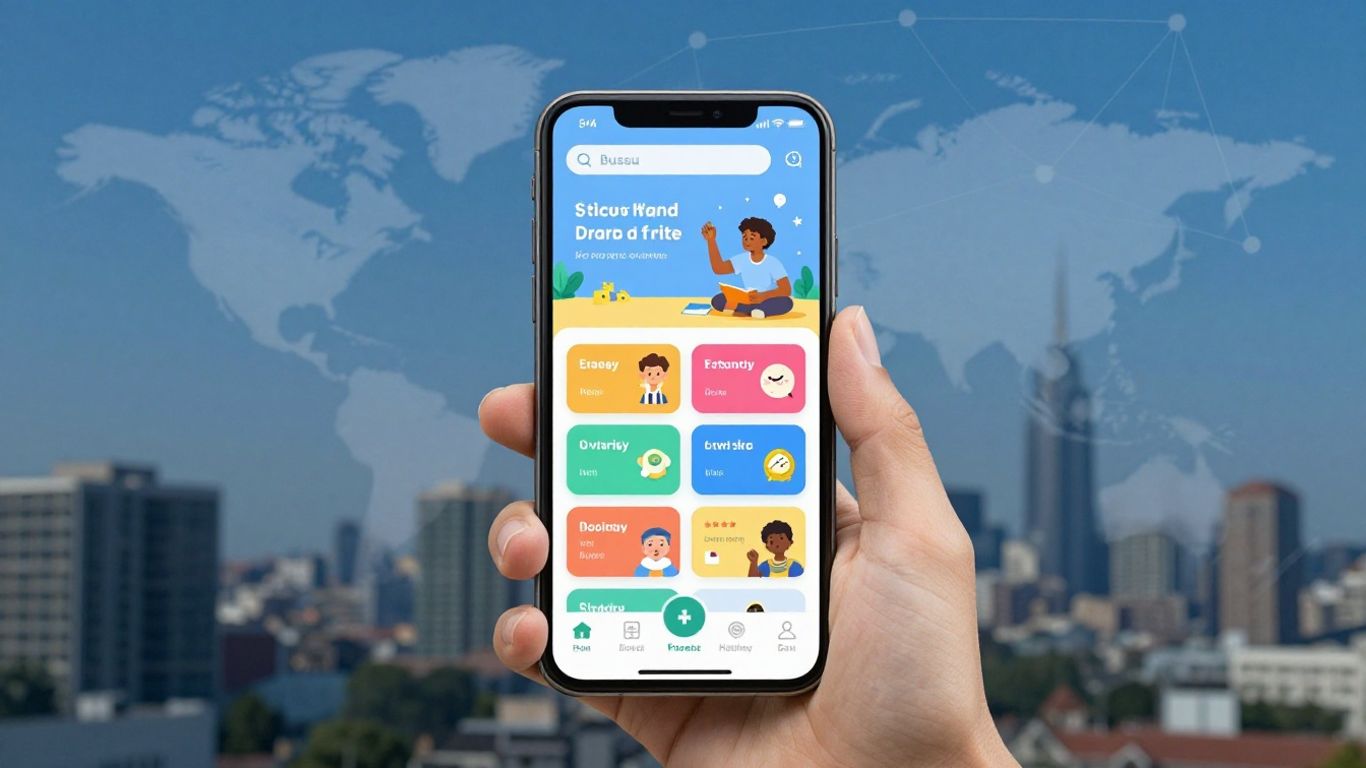
Busuu stands out for connecting you with native English speakers, creating a community where learning happens in a more practical way. It covers everything from basic to advanced levels, with a cool feature: you receive feedback on your English, with tips to sound more like a native speaker. It's a great option if you want to prepare for travel or work, practicing reading, writing, and comprehension.
The app has a free plan that already offers some recorded lessons and dialogues, as well as a tool to practice phrases aloud. But to access everything, the paid version is the way to go. With it, you unlock more complex grammar lessons and can even customize the content based on your goals. Want to create a study schedule and receive reminders? The premium version takes care of that. And there's also a forum to exchange ideas with other students and native speakers.
Busuu is ideal for those seeking closer interaction with the language and direct feedback.
The Busuu community allows you to practice with native speakers, receiving corrections and tips that help improve your pronunciation and speaking fluency. This exchange is one of the app's strengths.
Prices:
- Monthly: Premium (US$ 9.99), Premium Plus (US$ 13.99)
- Quarterly: Premium (US$ 24.99), Premium Plus (US$ 28.98)
- Semiannual: Premium (US$ 34.92), Premium Plus (US$ 39.96)
Remember that, like any app, Busuu works best as a complement, not the sole source of learning.
4. Memrise
Memrise is an app that stands out for its strong focus on vocabulary, using a spaced repetition approach that helps fix words and phrases in long-term memory. You know that feeling when a word just won't leave your head? That's more or less what they aim for.
One cool thing is that many of the flashcards are created by the users themselves, which means a huge variety of themes and words for you to choose from. If you're looking to boost your vocabulary, Memrise can be a great ally, especially since the free version already offers quite a lot.
For those who subscribe to the paid plan, Memrise Pro, there are some very interesting extra features. One of them is voice recognition, which helps practice pronunciation, and another is "learn with native speakers," which are short videos of people speaking words and phrases. This gives an idea of how the language is used in everyday life.
Memrise is geared towards those who want to expand their vocabulary quickly and easily. Don't expect it to make you fluent on its own, but as a complement to memorizing new words, it works very well.
Memrise is ideal for those who have free time and want to use those moments to learn new words in a fun and effective way. It's not the kind of app that will teach you to build complex sentences from scratch or have long conversations, but for memorizing vocabulary, it's really good. It's a tool that complements other studies, helping to fill in vocabulary gaps that may arise in other apps or courses.
5. Babbel
Babbel is a tool that stands out for focusing on everyday situations, which is great for those who want to learn English for use while traveling or at work. It adapts to your routine, allowing you to study a little each day.
The app is good for those seeking convenience and wanting to feel more confident when speaking in real-life situations. He divides the lessons into helpful categories, such as "travel," "work," and "daily life," making learning more focused.
Babbel offers:
- Short lessons that fit into any schedule.
- Focus on conversation for practical situations.
- Grammar and pronunciation reviews.
- Adjust it to your available daily time.
The idea is for you to learn the language in a way that you can use it right away, without any fuss. It's like having a personal guide for the most common situations you'll encounter speaking English outside of Brazil.
While the free version is a good start, the paid plan opens up a range of options, including live lessons and more in-depth grammar and conversation tips. It's an investment for those who want to accelerate their learning and have access to all the material.
6. Wlingua
Wlingua stands out for offering a guided learning method, reminiscent of a traditional course, but with the convenience that only an app can provide. It's a great option for those who want to boost their vocabulary or simply gain a clearer understanding of the English language. The lessons cover everything from basic to advanced levels, and the best part is that you get real-time corrections while doing the exercises. They also incorporate different accents and explain concepts in a very straightforward way.
One thing I found interesting is that Wlingua has specific modules for those who want to prepare for the Cambridge B2 First exam. This shows that the app isn't just for those who want the basics, but also for those with more serious language goals.
The app is free, which is already a huge plus. But if you want unlimited access to all lessons and native voices, there's a paid option. The quarterly plan costs R$49.90. They also offer a spaced repetition system, which helps to solidify the content in the long term, something that is very important for... learning and retaining the language.
Wlingua is a solid option for those seeking a clear and progressive learning structure, with the advantage of being able to practice anywhere, anytime. The variety of accents and detailed explanations are a plus.
7. Rosetta Stone
Rosetta Stone is a well-known name when it comes to language learning, and for good reason. They've been in this business for quite some time, and their method focuses heavily on immersing you directly in the language, without much translation. The idea is that you learn English the way you learned your native language: by seeing images, listening, and repeating.
The experience is very immersive, since most of the content is presented in English. This might be a little challenging at first, but in the long run it helps you think in the language. The lessons are divided into units, and they suggest about 30 minutes a day. It's a commitment, you know? They use voice recognition to give you feedback on your pronunciation, which is great for those who want to speak without fear.
One thing that sets Rosetta Stone apart is the option to have live classes with teachers. These are group sessions, so you have the chance to practice conversation with other people and with a native speaker. It's a nice bonus, but it's good to be mindful of making the most of your time.
The plans have changed a bit in recent years. Before it was a one-time purchase, now it works on a subscription basis. There are options for 3, 12, or 24 months, and also a lifetime plan. It's an investment, so it's worth considering whether their immersive method suits your learning style.
Rosetta Stone is a solid choice for those seeking a deeper, more immersive learning experience, especially if you don't mind being exposed to the language from the start. Practicing with native speakers is a significant advantage for those who want to gain confidence in speaking.
8. Mondly
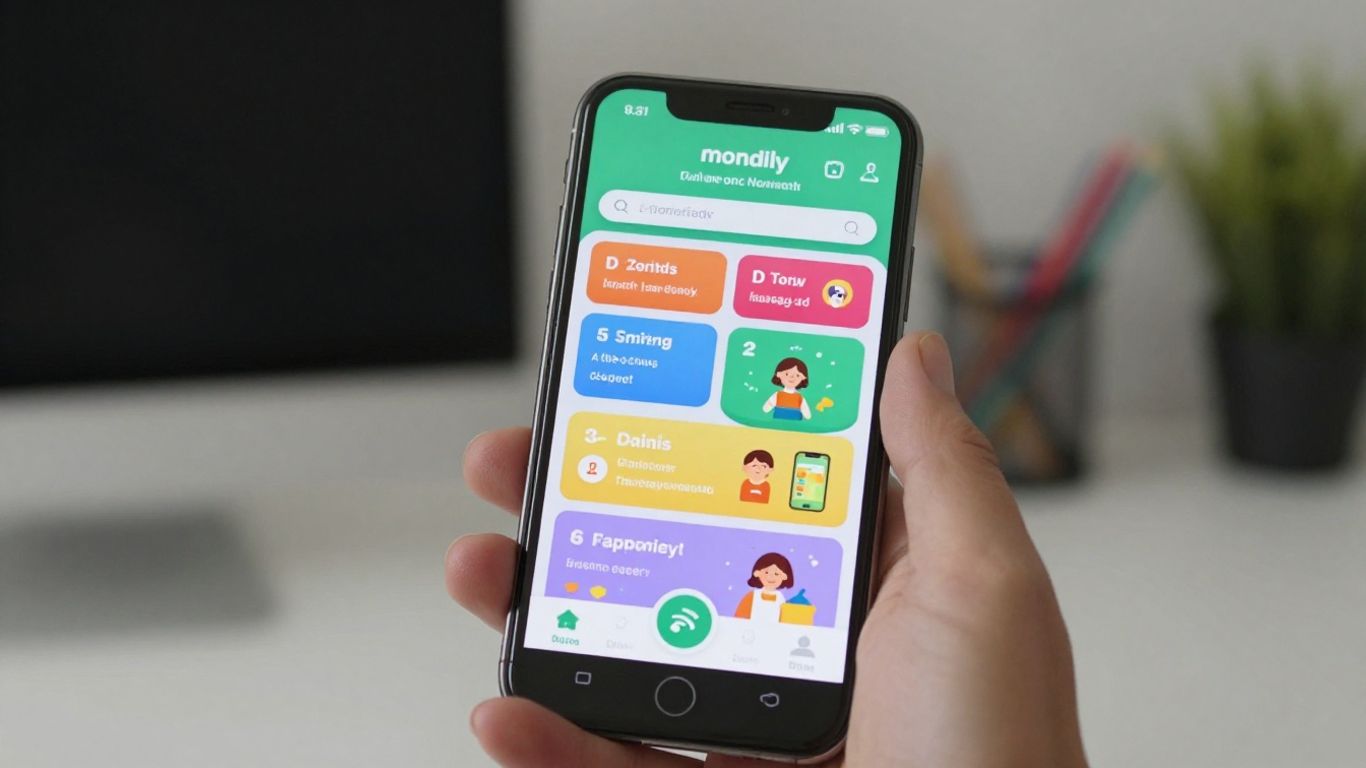
Mondly is an app that stands out for its strong focus on conversation. It uses voice recognition to give you feedback on how you're speaking. Basically, you listen to a native speaker and then repeat, and the app tells you if it was good or not. It's a great way to start overcoming the fear of speaking aloud, especially if you're a beginner.
One thing they recently added is a virtual reality experience for those who subscribe to the paid version. The idea is to put you in situations with virtual speakers, as if you were really there, but without leaving home. There's also a chatbot that's quite fun; you can talk to it anytime, without any rush.
For beginners, Mondly is a great help in learning how to speak common phrases. The grammar explanations are short, so you might need other sources to delve deeper.
Mondly has a free version, but to access everything, such as VR and unlimited chatbot, you'll need a subscription. Paid plans are around US$9.99 per month or US$49.99 for a year. It's an interesting option for those who want to practice speaking in a more interactive and modern way.
9. Elsa Speak
If you're focused on improving your pronunciation, Elsa Speak is the app you need to know about. It uses artificial intelligence to analyze your speech and give you very detailed feedback on where you can improve. It's like having a private pronunciation tutor in your pocket, you know?
The app is great for anyone who wants to sound more like a native speaker or correct those little mistakes we don't even realize we're making. It focuses heavily on specific English sounds that can be difficult for speakers of other languages.
Elsa Speak is unbeatable when it comes to improving pronunciation.
He offers:
- Real-time feedback on your pronunciation.
- Lessons focused on specific sounds and intonations.
- Exercises to help reduce your accent.
- Track your progress to see how much you are improving.
It's a powerful tool for anyone who wants to feel more confident speaking English, especially if you already have a foundation in the language and want to refine the details.
For those seeking a more native-like accent and wanting to correct subtle details in their speech, Elsa Speak proves to be a really good choice. It helps you polish your communication in a way that few other apps can.
10. BBC Learning English
To close our list, we have a name that is synonymous with quality learning: BBC Learning English. This free resource is a true treasure for those who want to delve deeper into the language, covering everything from grammar to vocabulary in a well-structured way.
The site offers a huge variety of materials, including articles, videos, and audio, all created to the BBC's high standards of excellence. It's the kind of platform that makes you feel like you're really studying, with lessons that actually teach and don't just pass the time. They have content for all levels, so whether you're just starting out or already have some background knowledge, you'll find something useful.
One of the cool things is that they focus a lot on how to use English in everyday life, which is great for anyone who wants to communicate naturally. You can find lessons focused on pronunciation, specific vocabulary for business, or even understanding news. It's a very complete resource, you know?
- Grammar and Vocabulary: Detailed lessons to understand the rules and expand your vocabulary.
- Pronunciation: Tips and exercises to improve your accent.
- English for Everyday Life: Practical content for everyday situations.
- News and Culture: Learn English with current and relevant topics.
If you're looking for a more formal learning experience with high-quality materials, BBC Learning English is a sure bet. It's one of those resources you can rely on for consistent study that delivers results. They are truly dedicated to teaching the language clearly and effectively.
It's one of those classics that never disappoints, you know? Perfect for those who want a more serious study and aren't afraid to dedicate a little more time. And the best part is that it's free, which helps a lot with your wallet. If you want to practice your listening skills, for example, they have great resources. audio resources which helps a lot.
So now what? Which app to choose?
Well, we've reached the end of our list, and I hope you now have a better idea of which app can best help you learn English in 2026. The truth is, there isn't one single "best" app for everyone, you know? It all depends on what you're looking for: do you want to focus on vocabulary? Do you need to practice conversation? Or maybe you prefer something more fun, like a game? The important thing is to take the first step and choose one that matches your learning style and the time you have available. Try a few, see which one you like best, and start studying. What really matters is consistency. Good luck on your journey!
Frequently Asked Questions
Which app is best for someone who is starting to learn English?
For those taking their first steps, apps like Duolingo and Memrise are great. They use games and repetition to teach basic words and phrases in a fun way, which helps create the habit of studying every day without it becoming boring.
Are there any apps that help improve pronunciation?
Yes! Elsa Speak specializes in pronunciation. It uses artificial intelligence to listen to you speaking and tell you exactly where you need to improve, like a private tutor correcting you on the spot.
Which apps are good for practicing conversation?
For real conversations, Busuu and Falou are good options. They connect you with other learners or native speakers, allowing you to practice what you've learned in everyday situations.
Can I learn English using videos and music?
Absolutely! Apps like Mondly and FluentU use videos, music clips, and real-life situations to teach. It's a much cooler way to learn new words and how people actually speak.
Which apps are free?
Many apps offer a free version that is already very helpful. Duolingo, BBC Learning English, and Memrise, for example, have free content. Some others, like Babbel and Rosetta Stone, offer a taste of what they have to offer before you decide to pay.
Do I need to pay to access all the features?
Generally, the most complete and feature-rich apps require a paid subscription. But even with the free versions, you can already learn a lot. Ideally, you should test the free options and see which one best fits your budget and learning style.
Is it possible to learn English using only apps?
Apps are incredible tools and can greatly accelerate your learning, but they aren't the only thing you need. Ideally, you should combine the use of apps with other forms of study, such as watching movies, listening to music, reading books, and, if possible, talking to people who speak English.
What is the difference between apps focused on vocabulary and those focused on conversation?
Vocabulary-focused apps, like Memrise, use techniques to help you memorize many new words. Conversation-focused apps, like Busuu or Elsa Speak, help you use those words in sentences, speak better, and understand what others are saying.